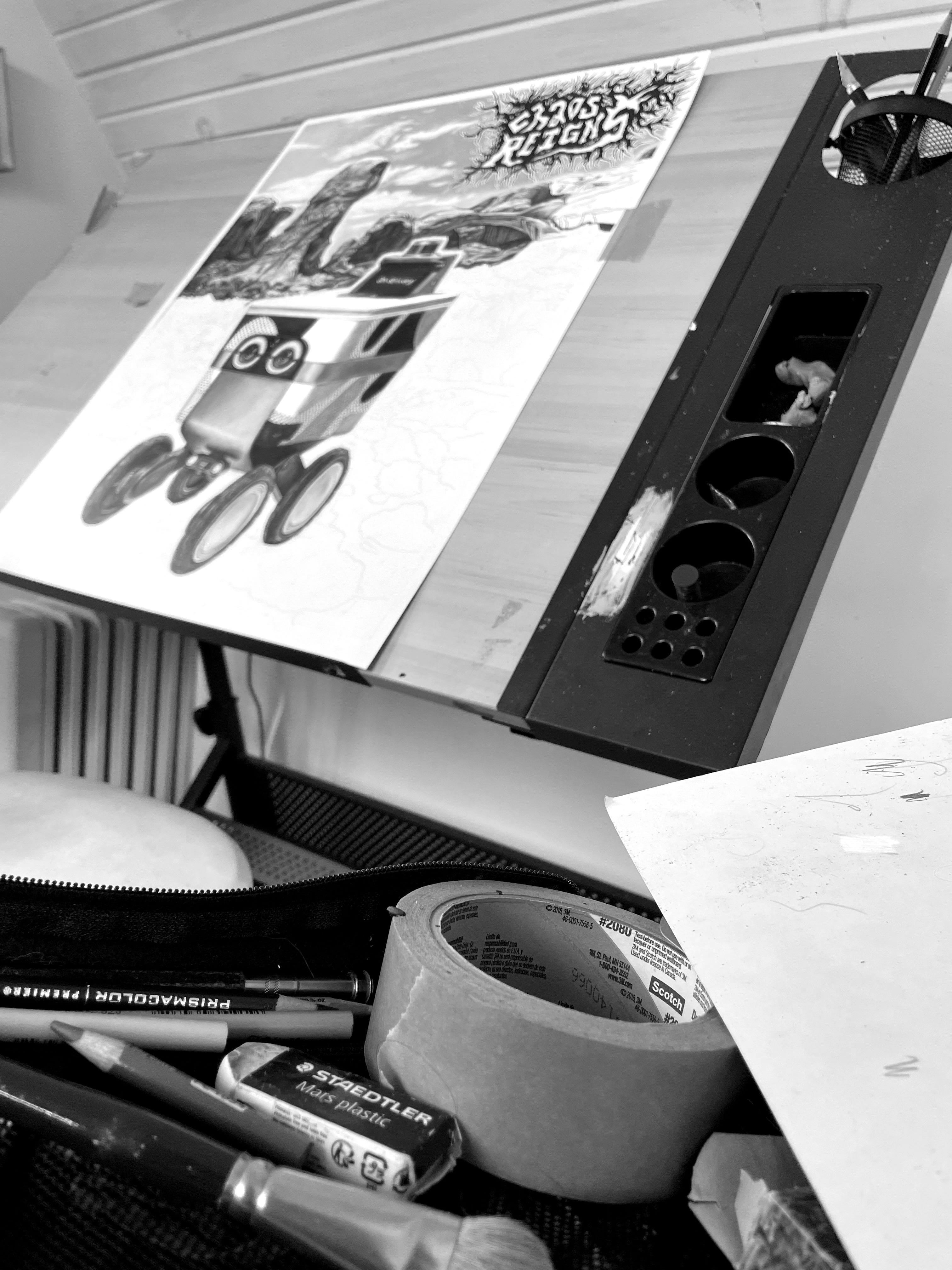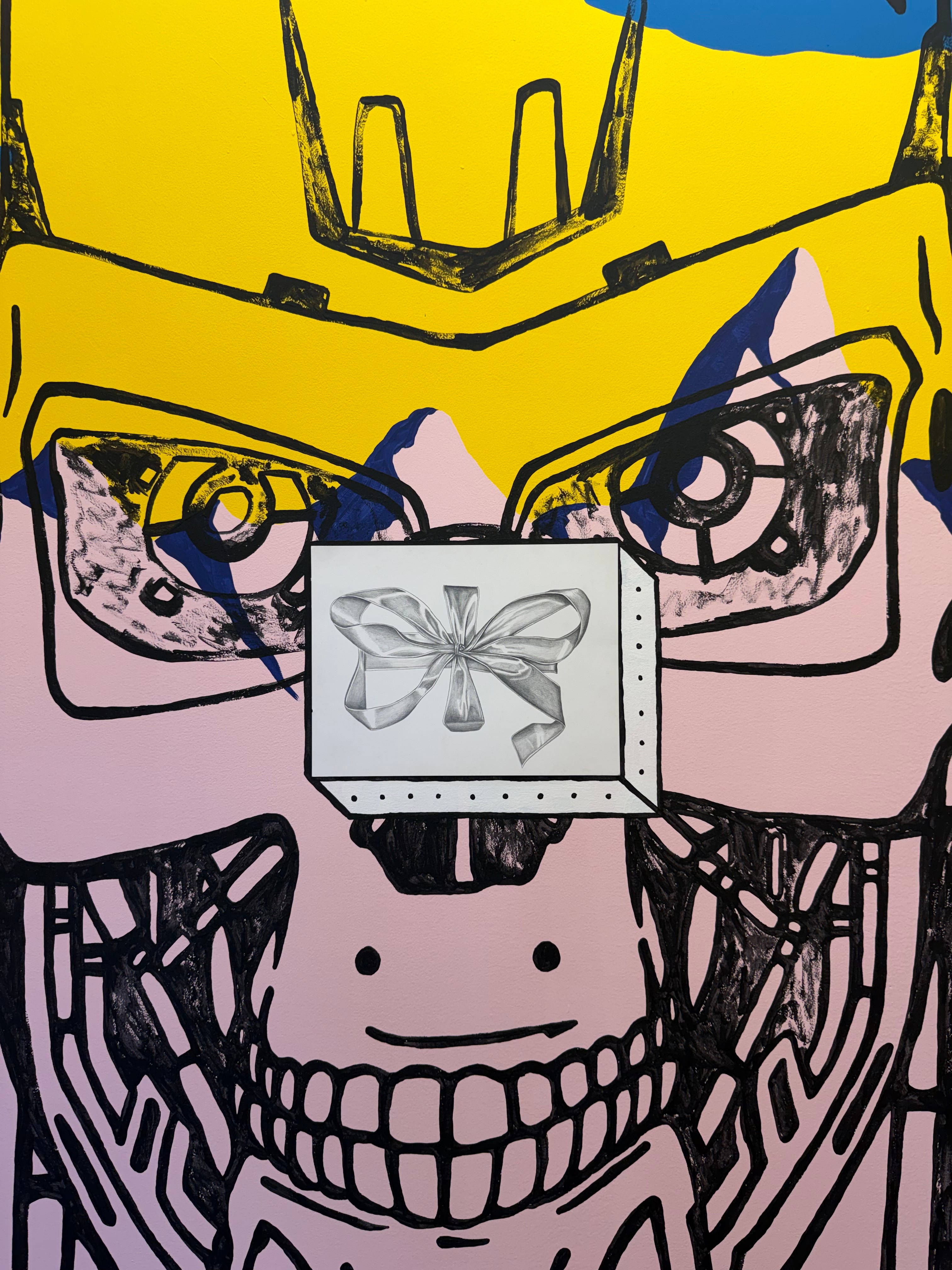
I spent a week on the road while traveling from LA to Denver, for the Drawing Never Dies Residency, and couldn’t help but feel a companionship to HC Westerman while experiencing the American West. To conclude my residency, I displayed fourteen drawings in a space covered in painted murals referencing HC Westerman’s See America First series. The nod to Westerman set the stage for exploring ideas of place, direction, structure, past, present, future. A Terminator t-800 makes a not so subtle appearance alongside a Postmates robot and other digital faces rendered in graphite and colored pencil
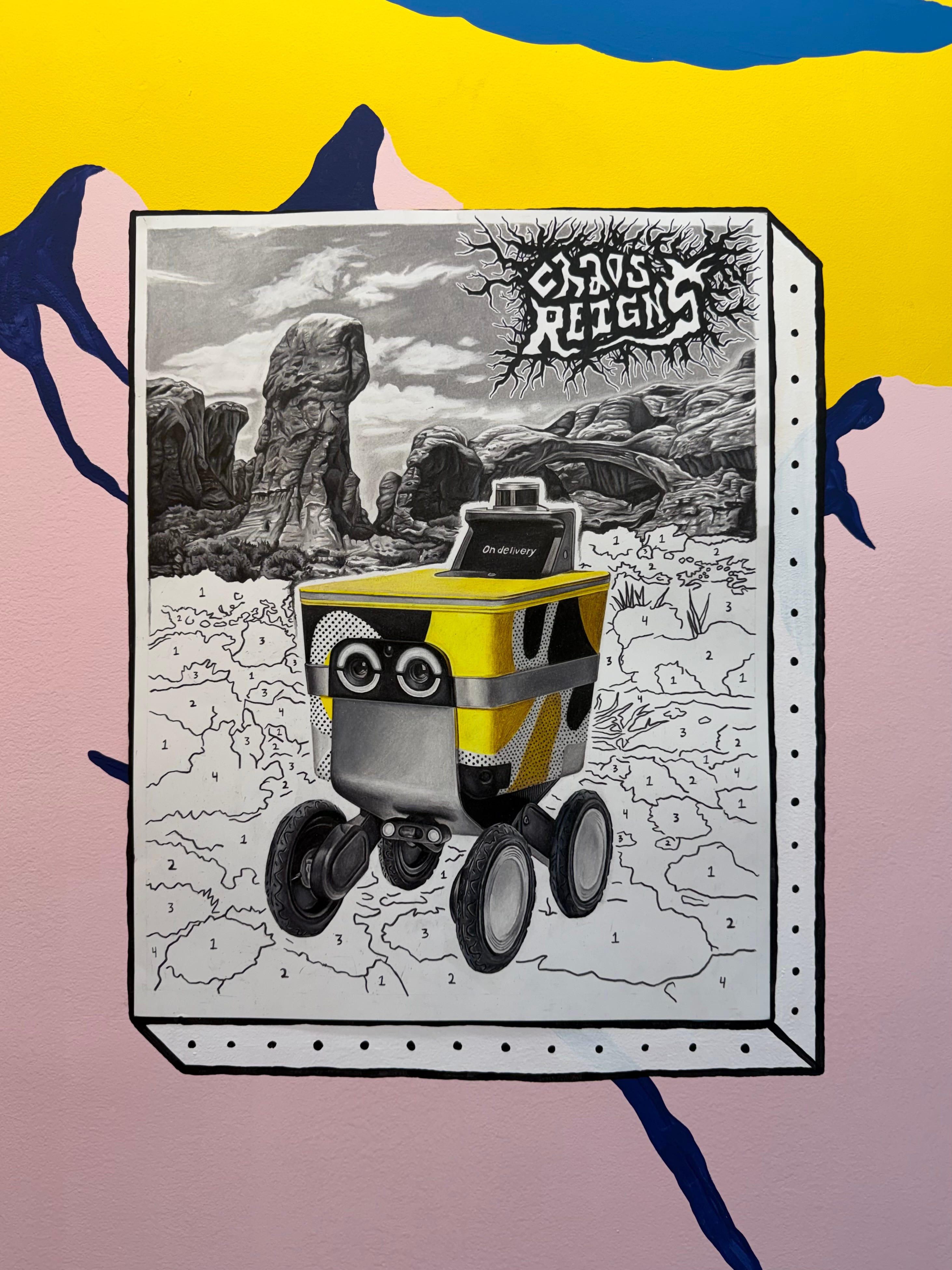
.My practice is multidisciplinary but I’ve always considered drawing a central through line. Coming to this residency and working primarily on drawing provided time and space to focus on fundamentals in my practice. It’s easy to come to drawing with nothing and immediately learn something about yourself. Some of the drawings arrived finished, some were only sketches and some were fully completed on site. All of them shared an innate reconciliation with lived experience, told through the most efficient means available - drawing on paper.
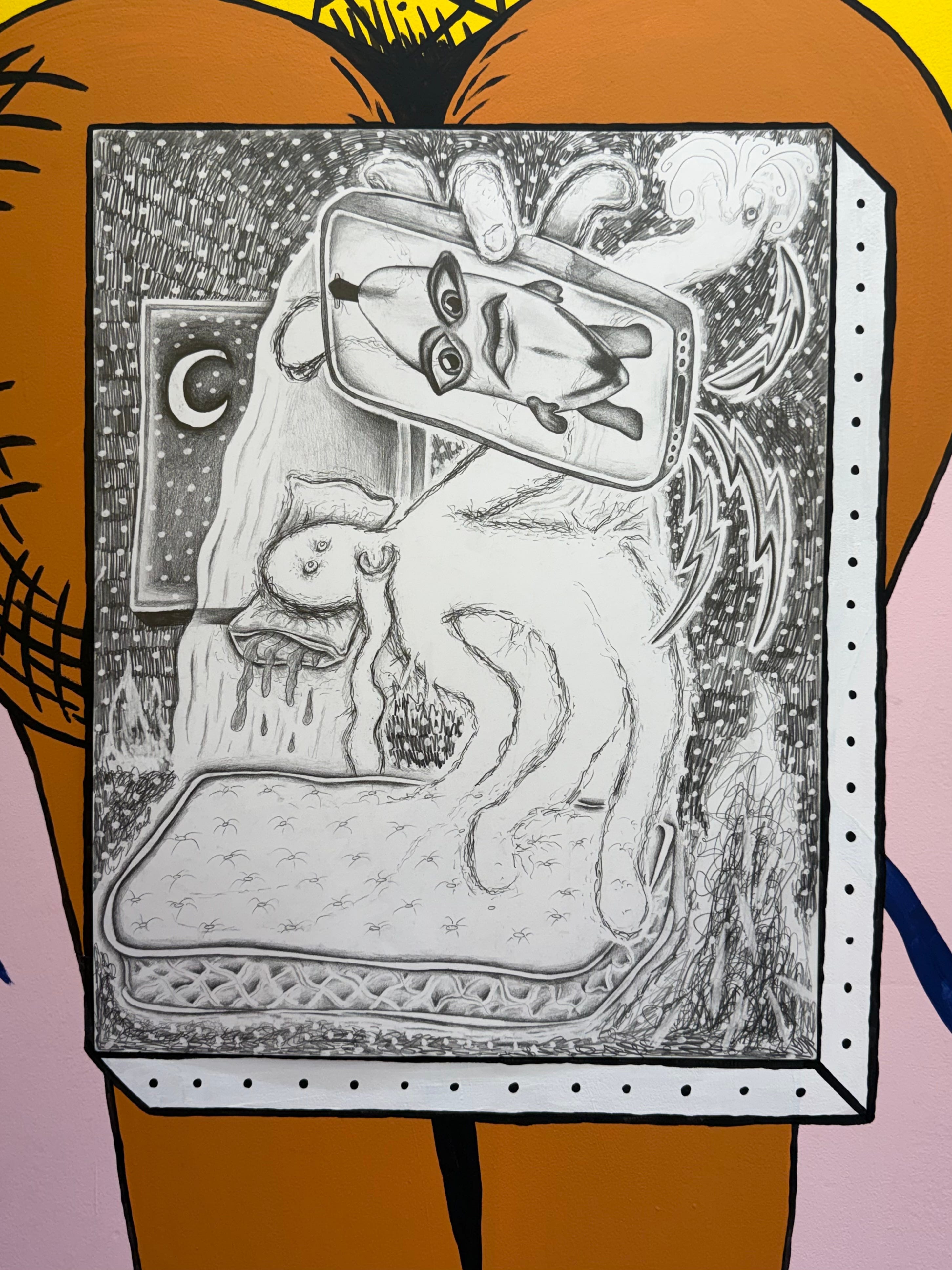
Drawing’s not like painting, it is much harder to cover a mark once it’s put down. The reductive nature lends itself to showcasing history and decision in a unique way. There are exceptions to this accolade but speaking broadly drawing maintains this quality above all. Paint is pigment with binder, a recipe with multiple ingredients sourced from all over. Graphite and charcoal are elemental and singular; they come straight from the earth as is. One can illuminate the darkness of night with fire and then use its ash to tell the story.
Drawing isn’t always the end but it’s usually the beginning. I love looking at the drawings of old masters, long before I learned to appreciate and behold the glory of their paintings. For me, their sketches were the easiest way to access how they thought, to begin to digest their systems of thinking and connect with them on some essential level. If a painting is a temple, a sketch is its door.
I wondered about each brick in a building becoming its own door, so eleven of the drawings in the space became a pyramid. I’ve been thinking about human’s relationship to technology in the wake of an economy built most entirely on AI speculation. This informed some of my subject matter but also how I presented the work. I wanted to create an experience that insisted on acknowledging and using your body, to get down low and close and explore in a physical way. There are a lot of rendered details and fluid stylistic approaches, little joys rewarding close examination.
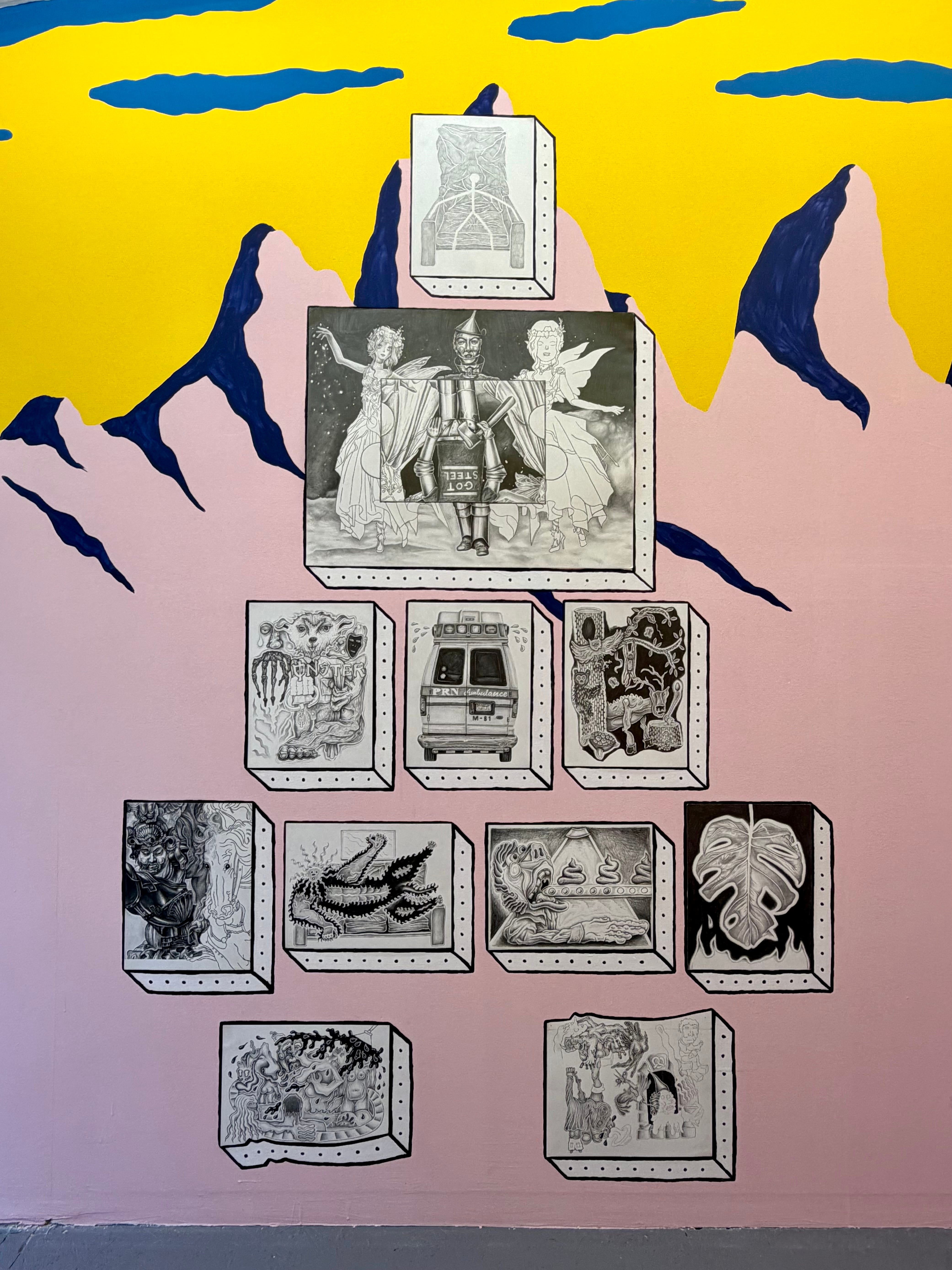
Drawing is the simplest universal human communication tool and has long been a fundamental vehicle for exchanging ideas and divine expression. It’s one’s agency recorded and displayed, all unabashed histories and reactions and hopes and ideals. Aside from AI, I tied in other subject matters like personal history, caricatured mascots of the digital domain, mundane but universal themes like home, ecological collapse and industry. I oftentimes work with medleys of symbolic imagery, freely borrowing from popular culture as stand ins for abstract storytelling. Stylistically I borrow from low brow sources like comics, tattoo culture and story book illustration. Transmuted from my hand and unified through some sensibility that is me. This is where the art lies, as obtuse as it may seem, and using drawing to explore these sensibilities is a most direct way to get there.
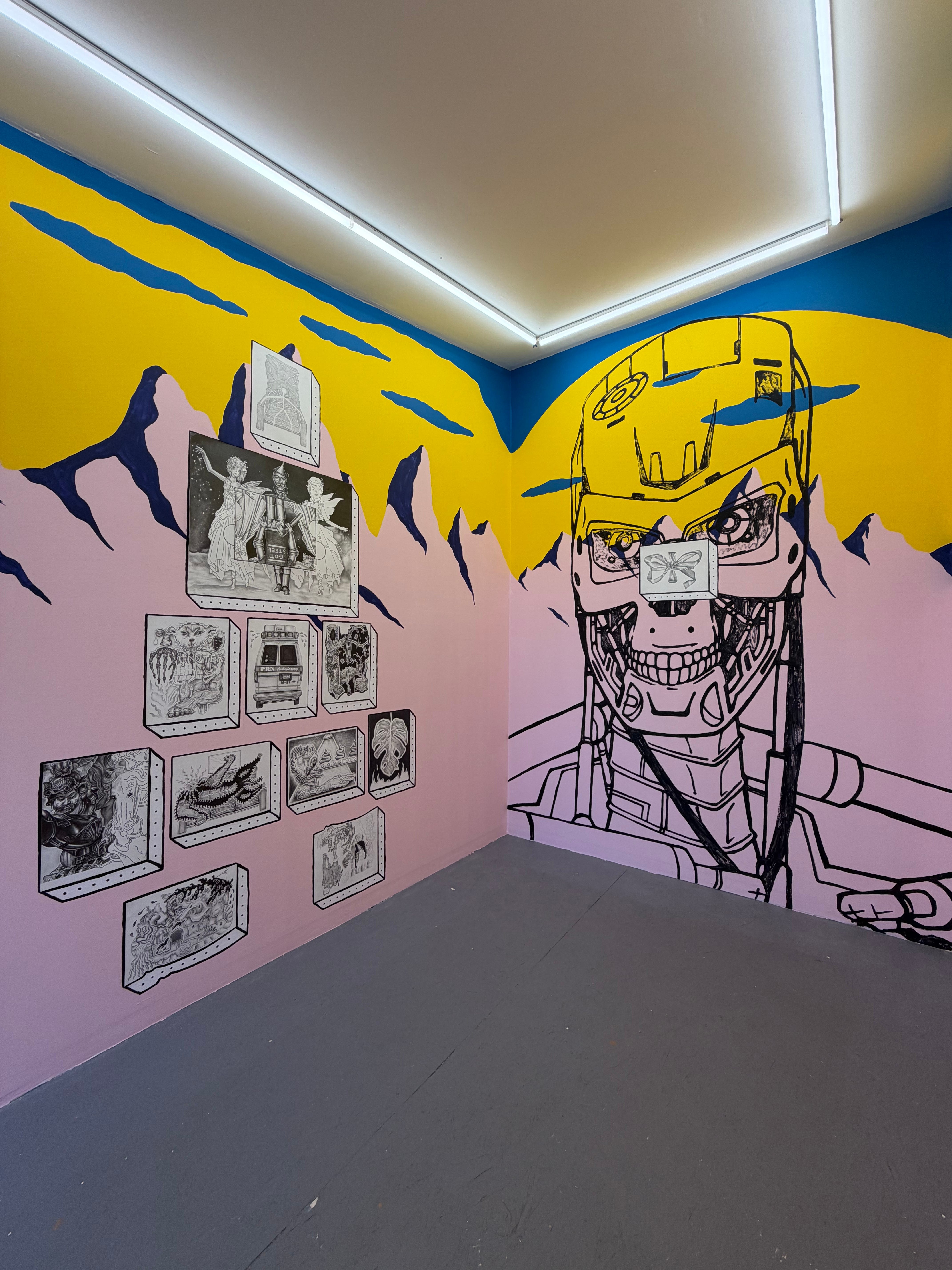
Once a drawing mark is made you have left your mind and body and put yourself into the world. All of us are doing this all the time, using our bodies to record, leaving evidence of our direction (tire tracks in mud, eyeliner carefully applied, jet streams in the sky); it happens before language but always communicates something of the world and our relationship to it. When harnessed through intention it can be an excellent communication device, or more openly a window to the soul. An access point to connect to another, or simply yourself. Every drawing is a map. And the drawer gets to determine where and what that map is for. Harnessing and framing those decisions is what can turn a hapless whistle into a glorious orchestra and drawing’s adaptive and accessible nature allows for anyone to become this type of composer should they decide to. Everything is like that, really, but not everything is available to you at all times like drawing.
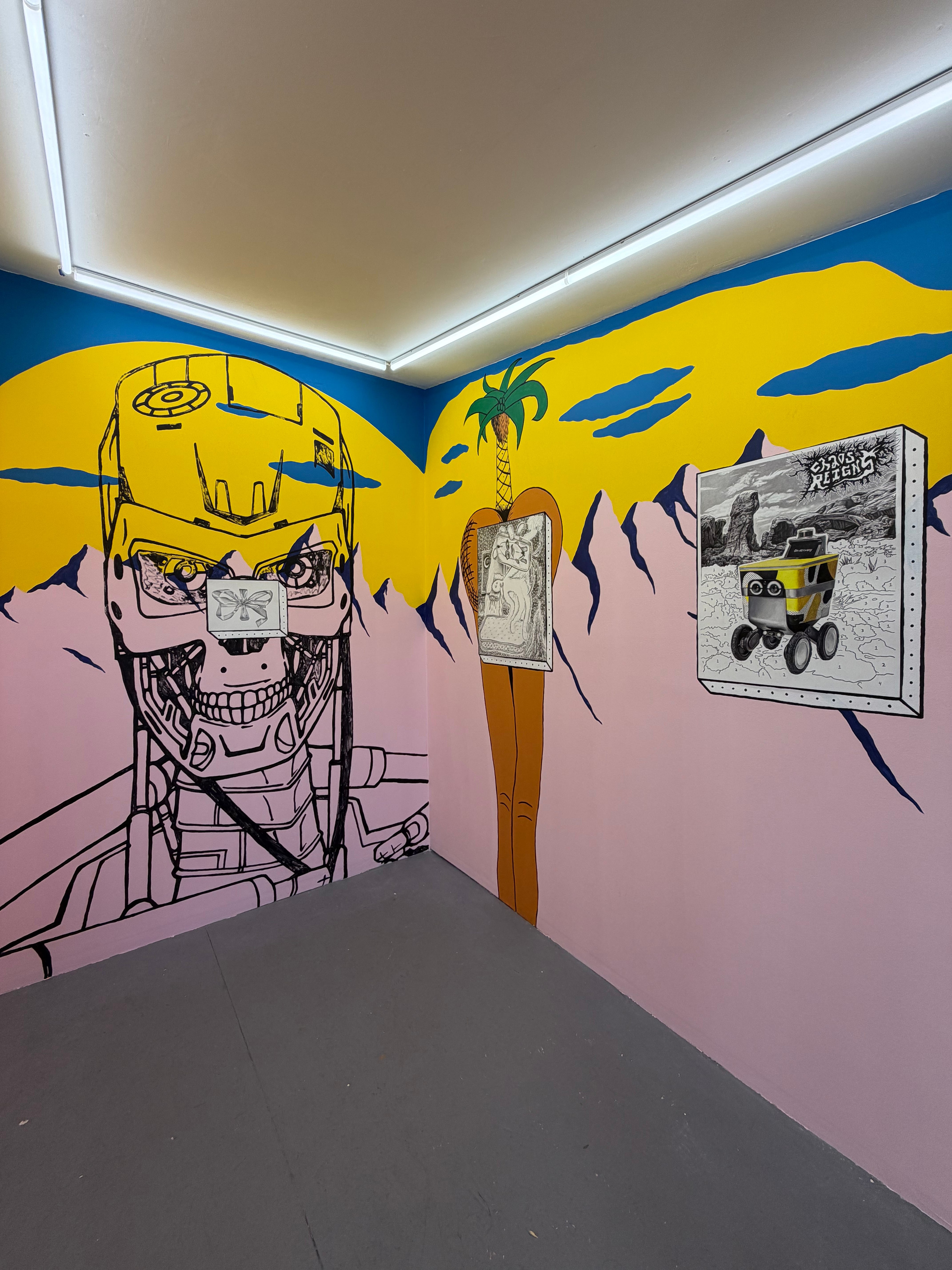
Draw a heart on the steamy mirror in your lovers bathroom. Follow the footprints embedded in snow to find your way in a landscape blanketed in erasure. Make a diagram for laborers trying to understand how you’d like a project completed. Celebrate a hunt by commemorating the bounty of a slain beast by way of form on a cave wall. All else is taken care of - you are safe, warm and fed, and only a few gestures away from historicizing your presence and existence on this earth. Why not indulge in the creative act of leaving a mark? Its presence may long outlast yours and inspire generations to come, or be wiped away like scribbles scrawled in the sand with the next incoming wave. Either way, I’m glad we had this time together and saw what could happen when we go to leave a mark.